
Assessments
Every question type in an assessment
The questions you can build into a test, a quiz or an end-of-unit assessment: what each is for and how it is marked. Pupils sit it online, or on paper you print and scan.
- question types
- 18question types
- groups
- 5groups
question types · 3
Quick questions
Short, sharp questions that check recall and understanding.
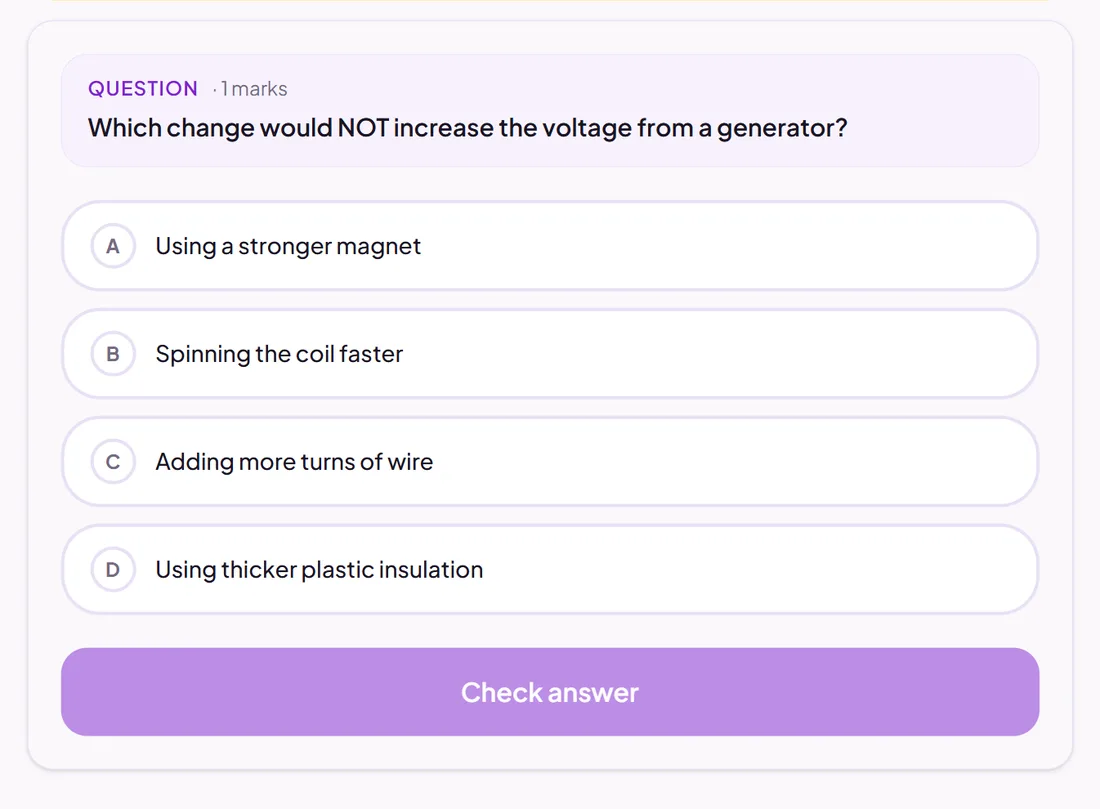
Multiple choice
Pupils choose from the options you write. You can allow more than one correct answer.
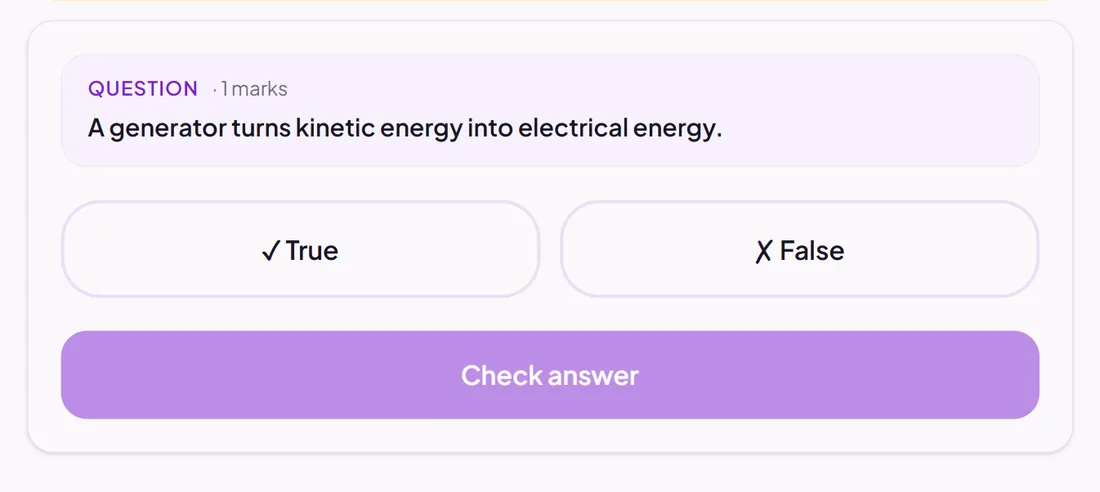
True or false
A statement pupils decide is true or false.
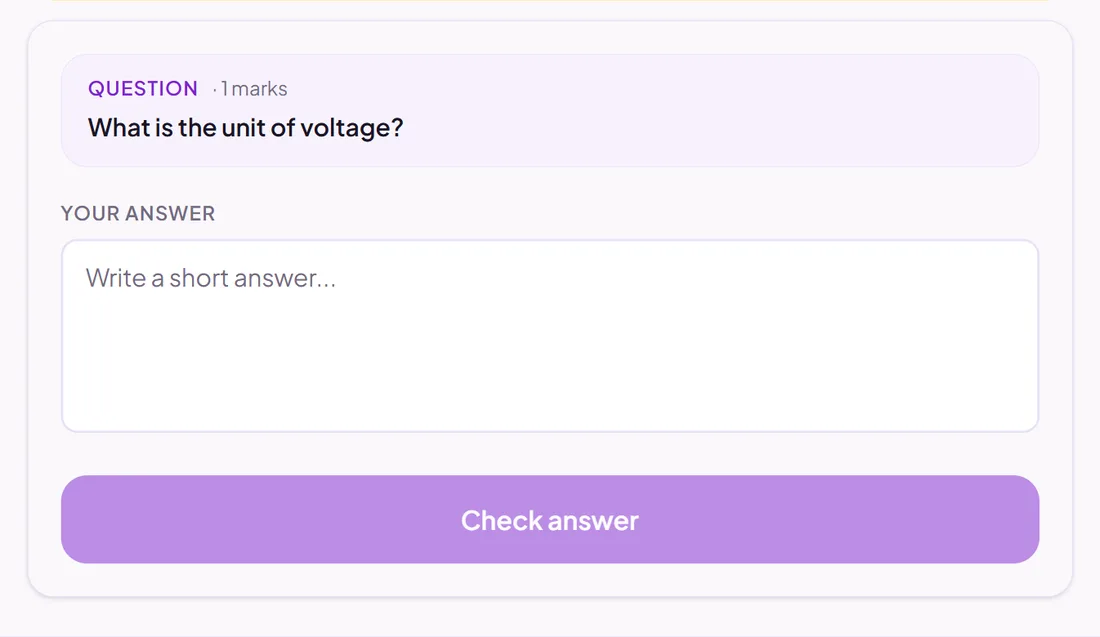
Short answer
Pupils write a word, a phrase or a sentence or two.
question types · 6
Match, order and complete
Questions with a right answer that Classfolio marks for you.
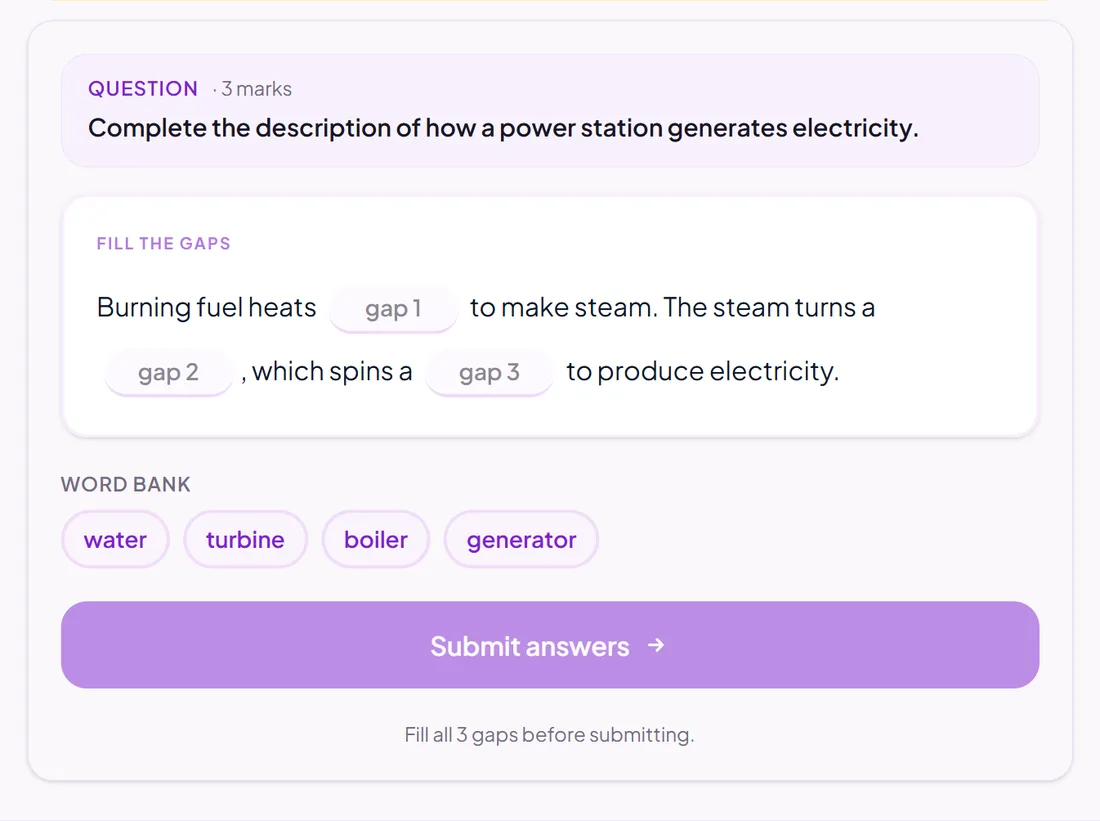
Fill the gaps
A passage with missing words, typed in or chosen from a word bank.
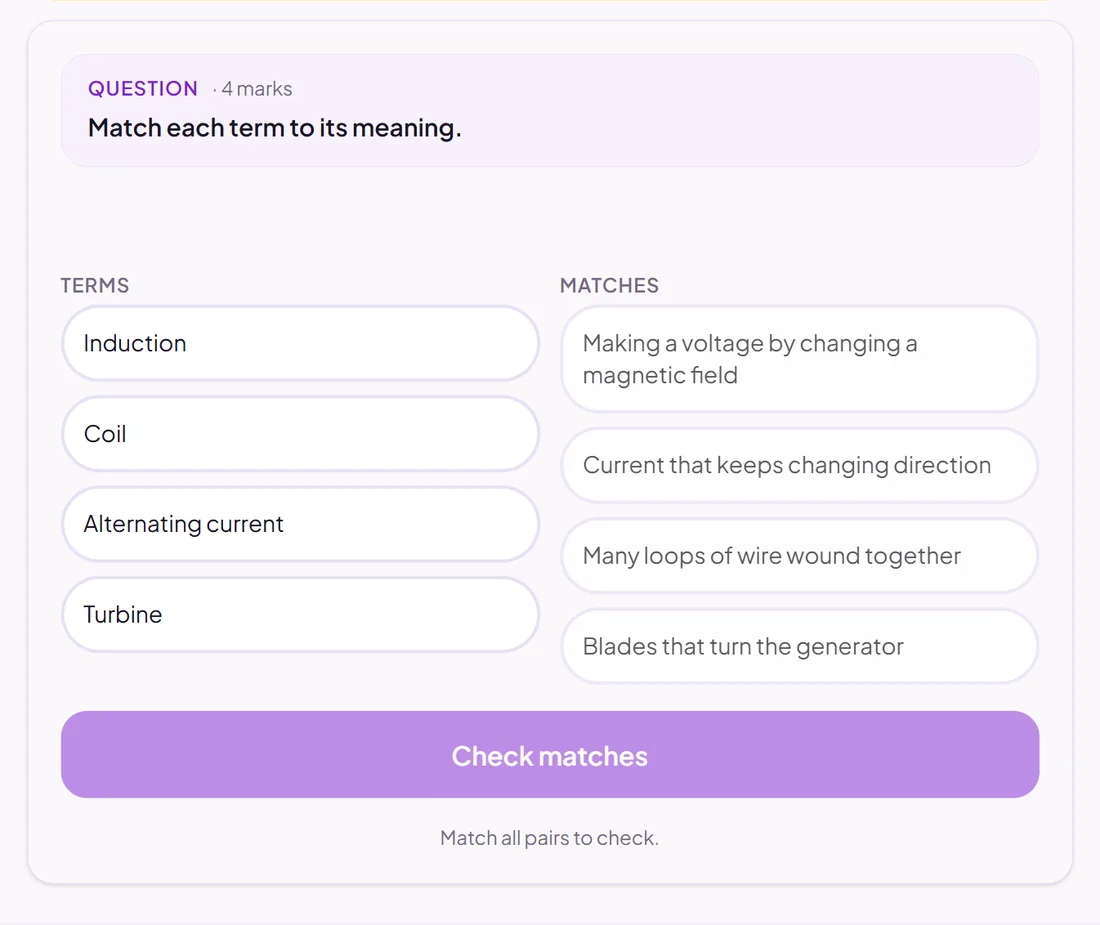
Match pairs
Pupils match each item on the left to its partner on the right.
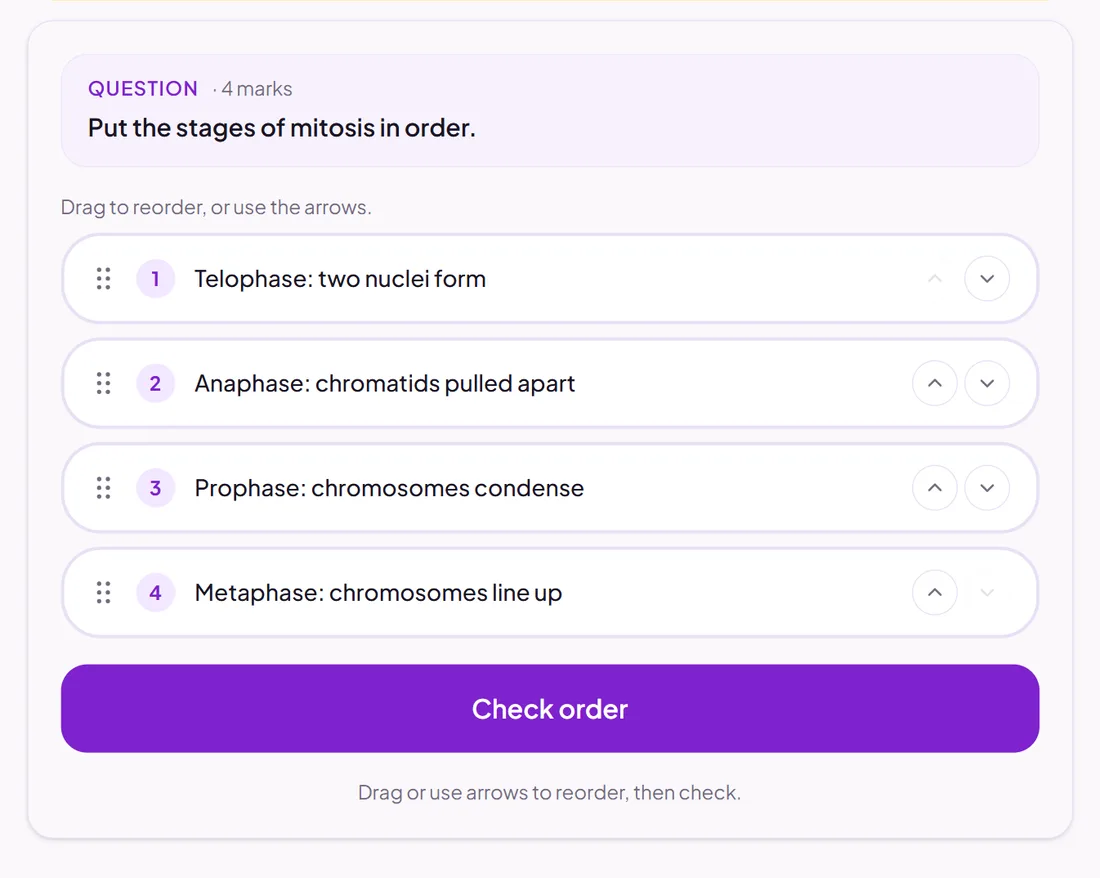
Order a sequence
Pupils put the steps of a process or a series of events in order.
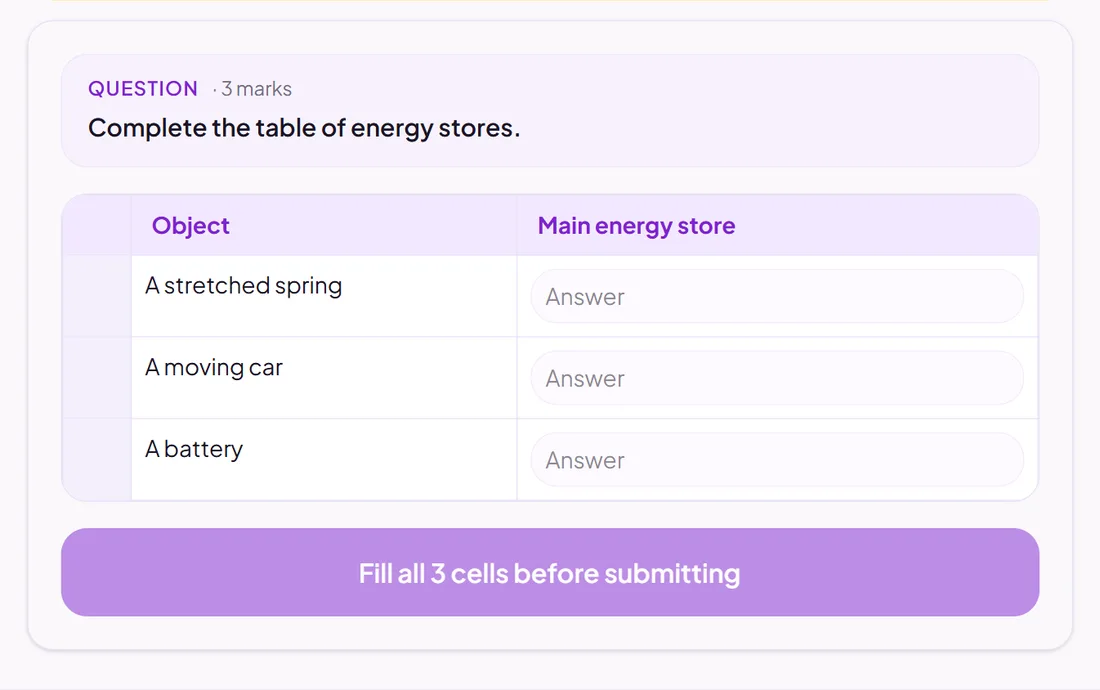
Table fill
A table with some cells for pupils to complete.
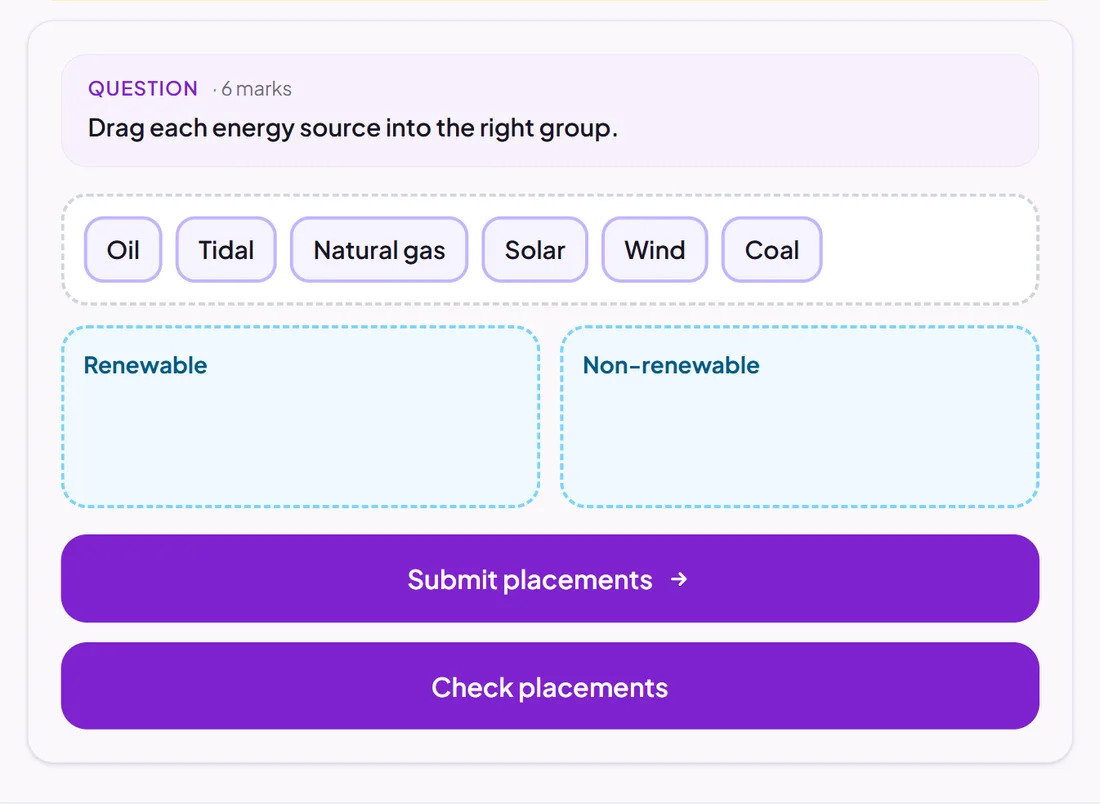
Drag and drop
Pupils drag items into the right zones: groups, a diagram or a picture.
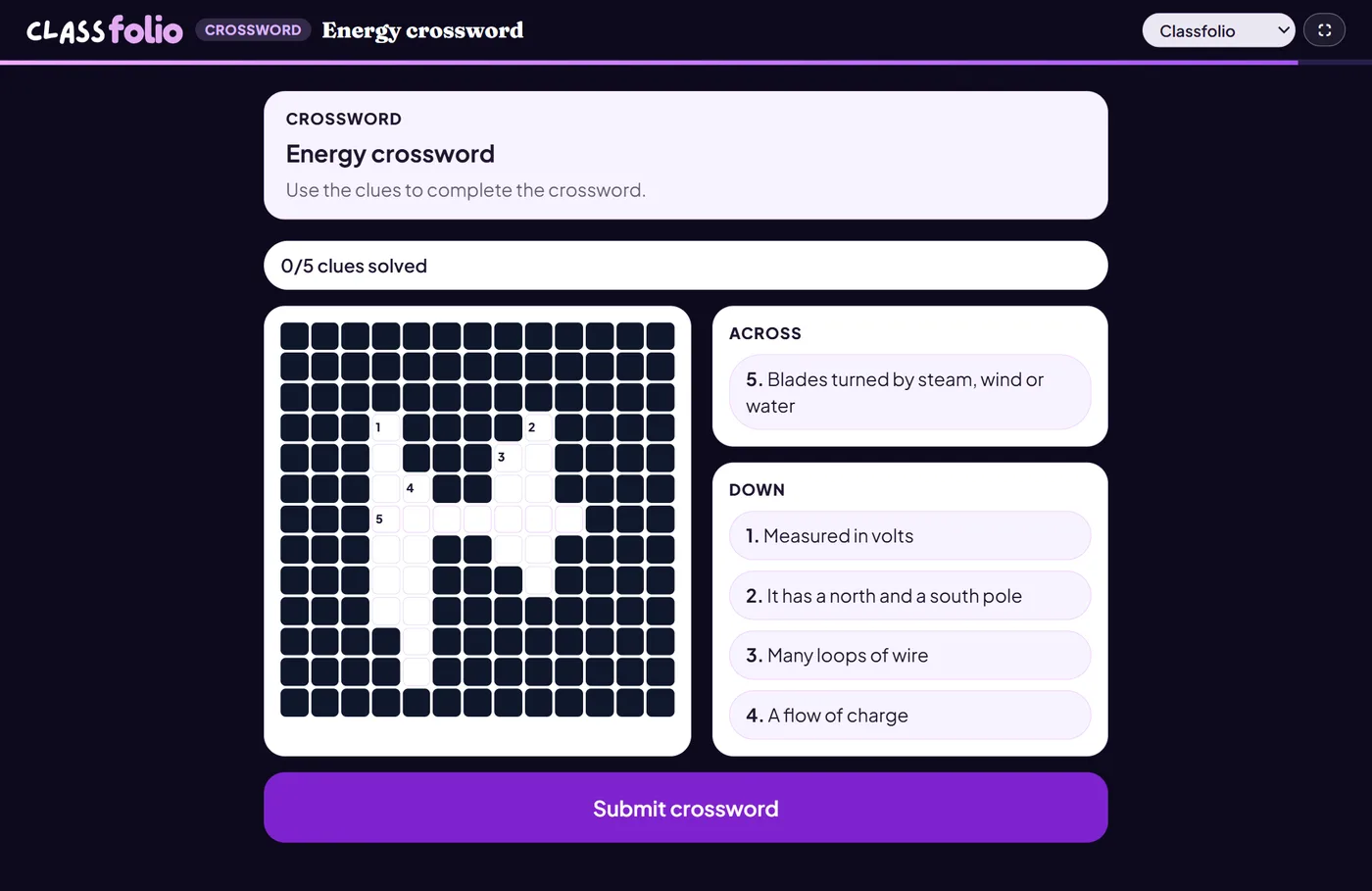
Interactive activities
The lesson editor's marked activities inside an assessment: crosswords, word searches, sorting, sequences, timelines, keyword matching and more.
question types · 3
Writing and sources
Longer answers, and questions about a source. Marked by AI against your mark scheme, and moderated by you.
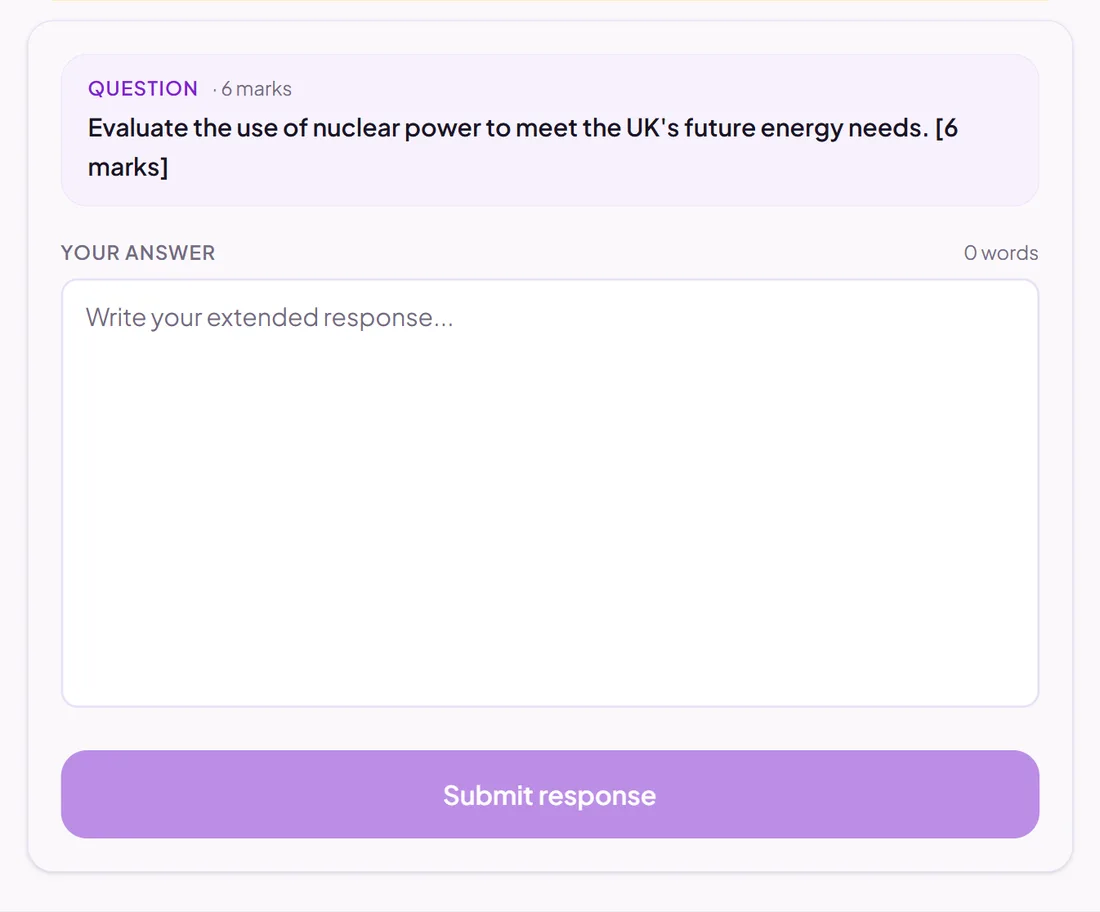
Extended response
A longer written answer: an explanation, an evaluation, an essay question.
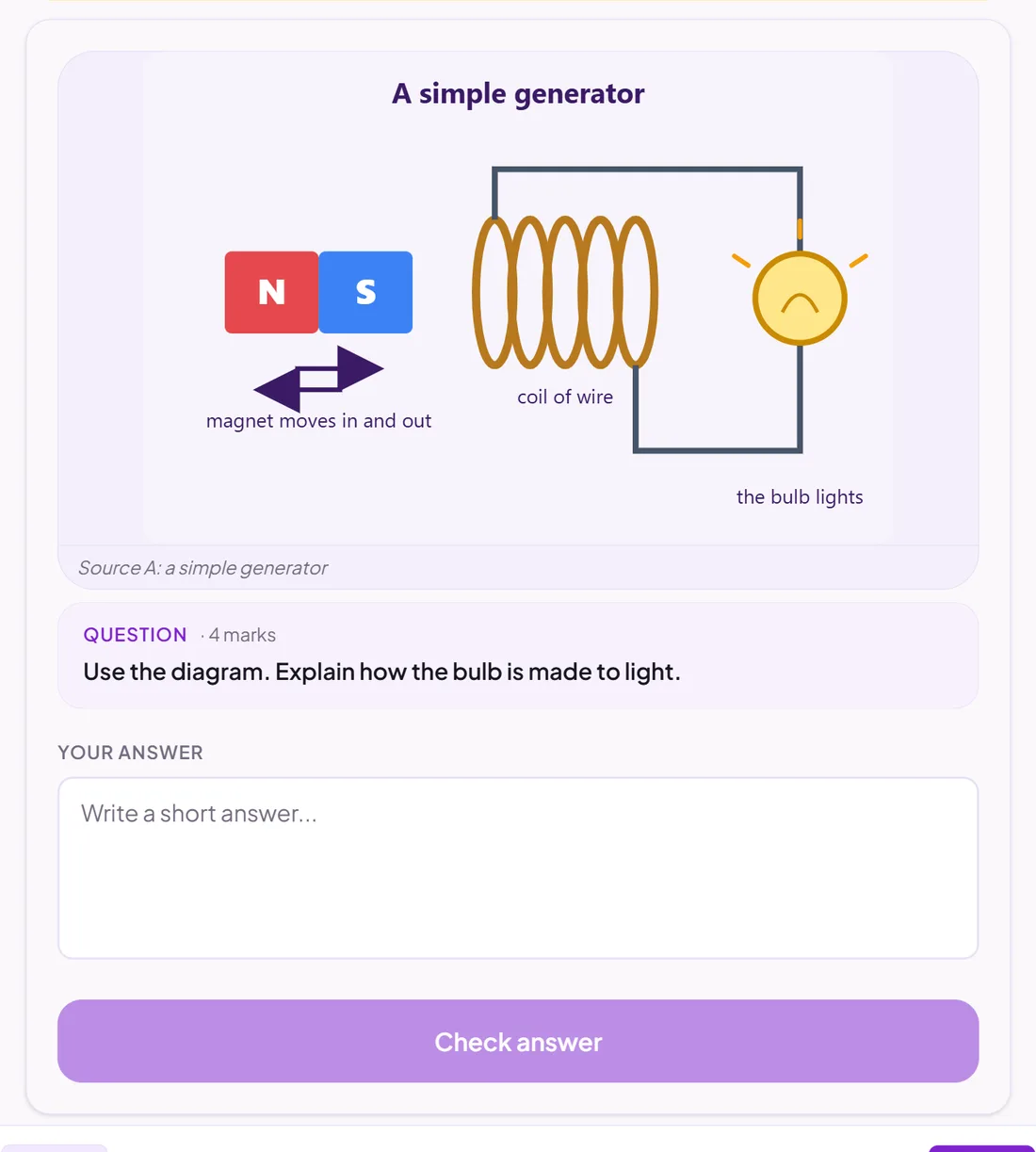
Source question
A question about a picture, a document or another source that pupils study first.
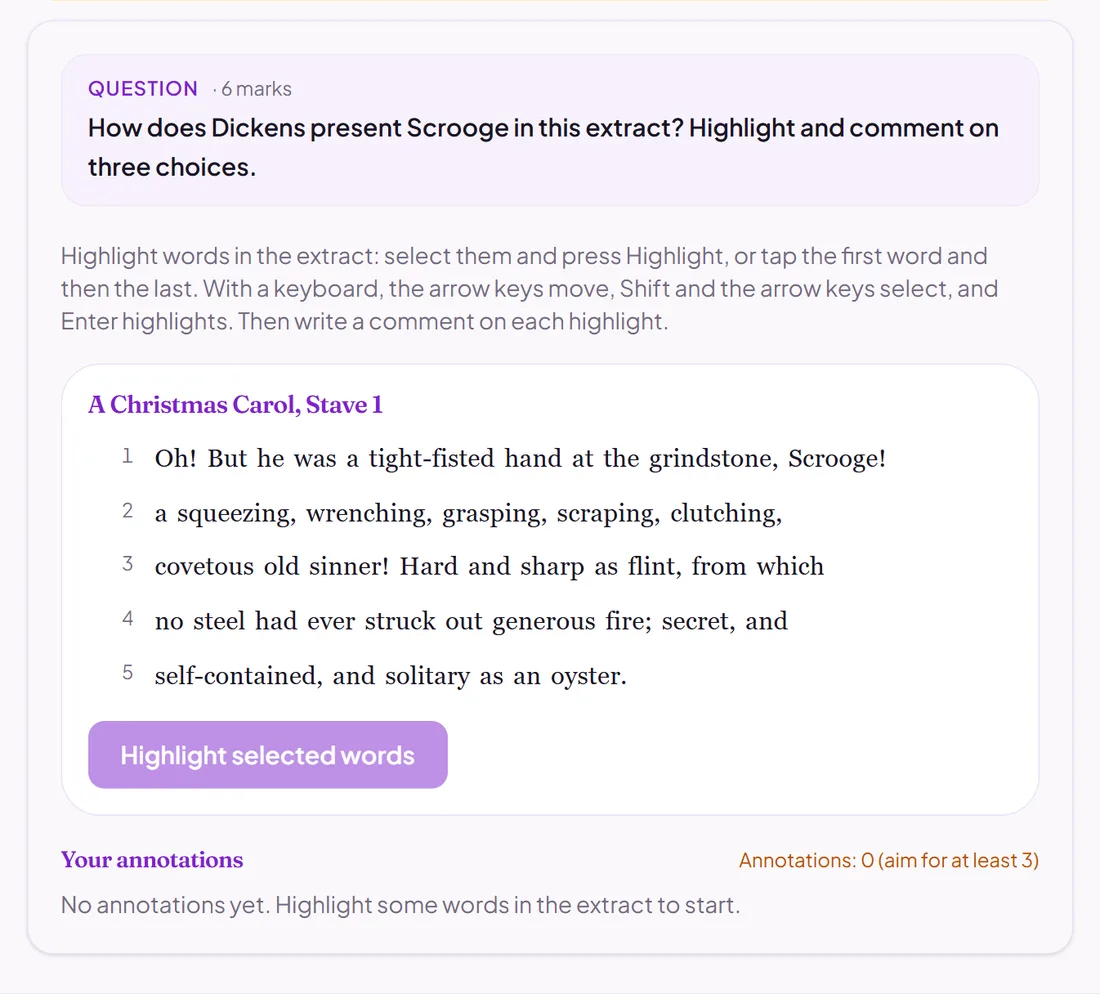
Annotation
Pupils highlight words in an extract and write a comment on each.
question types · 4
Maths, data and drawing
Working, graphs and diagrams.
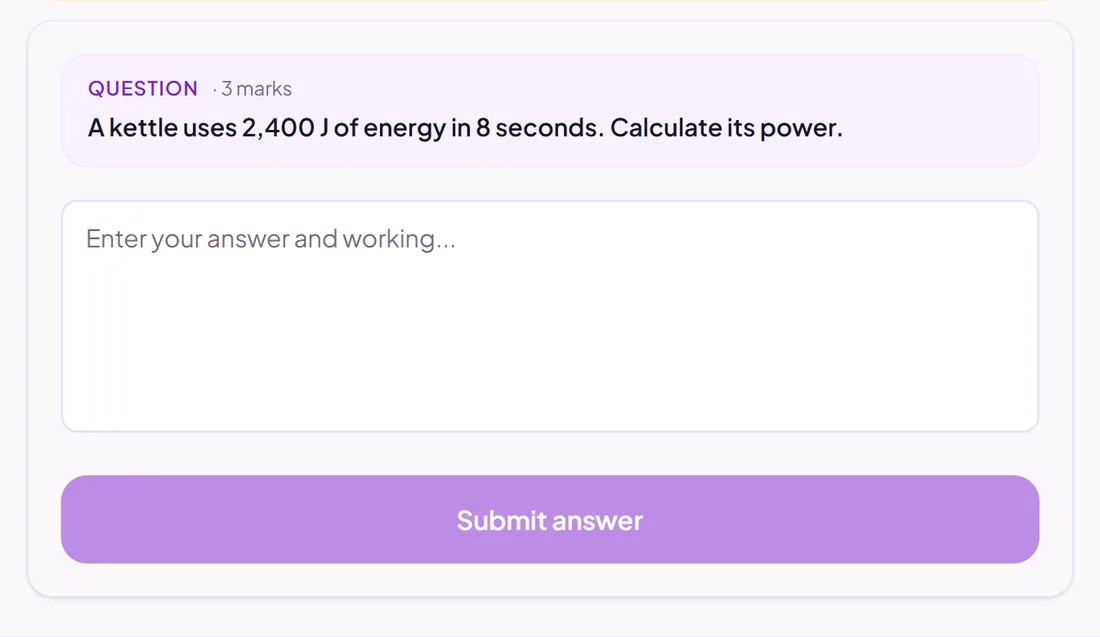
Calculation
Pupils show their working and give a final answer.
Quick calculations
Pupils answer a set of short sums, one answer each.
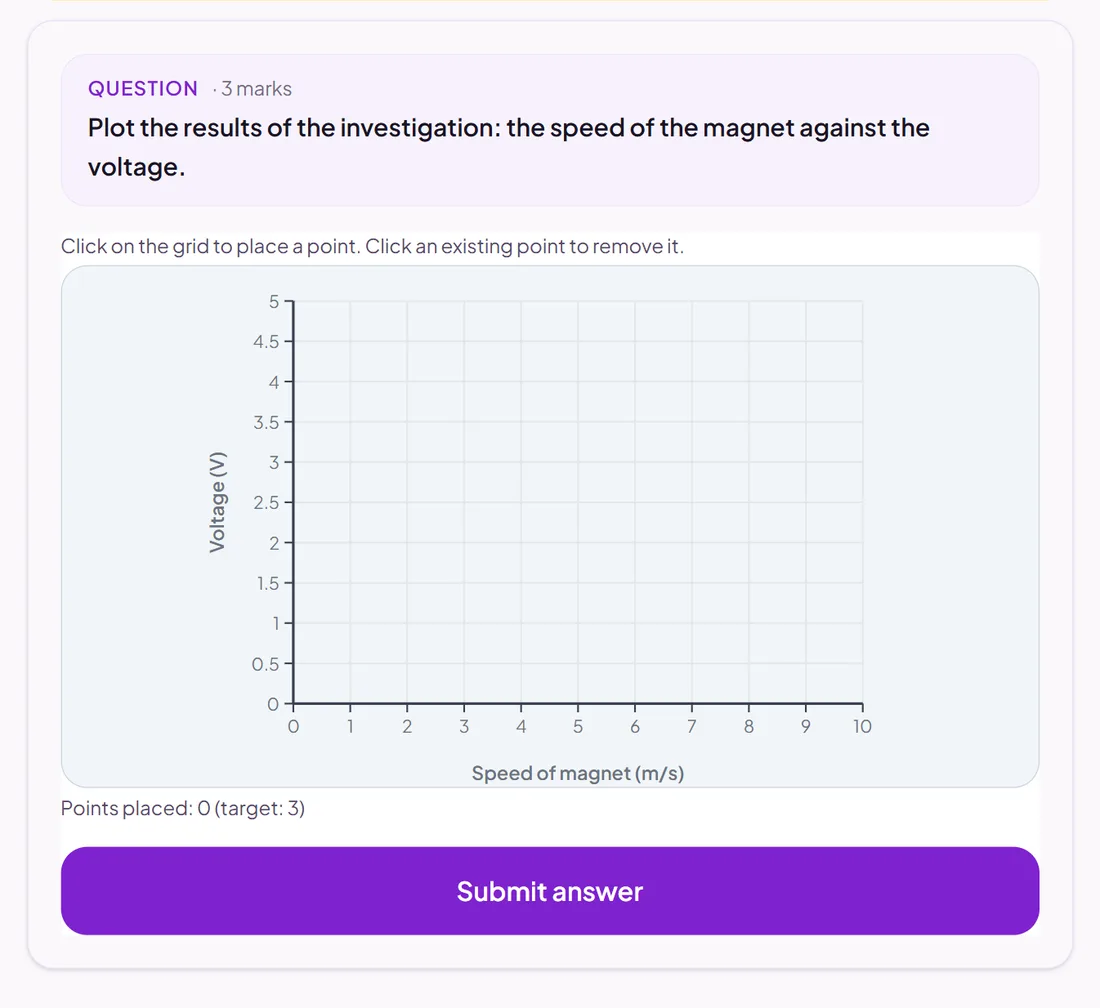
Graph and data
Pupils plot points, draw bars, complete a pie chart or fill in a frequency table.
Diagram
Pupils draw a diagram on paper (a circuit, a flowchart, a labelled sketch) and it is marked from the drawing.
question types · 2
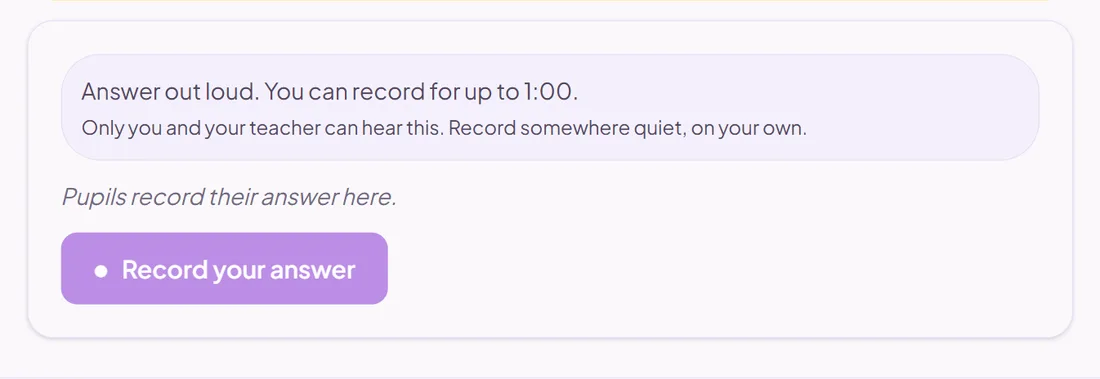
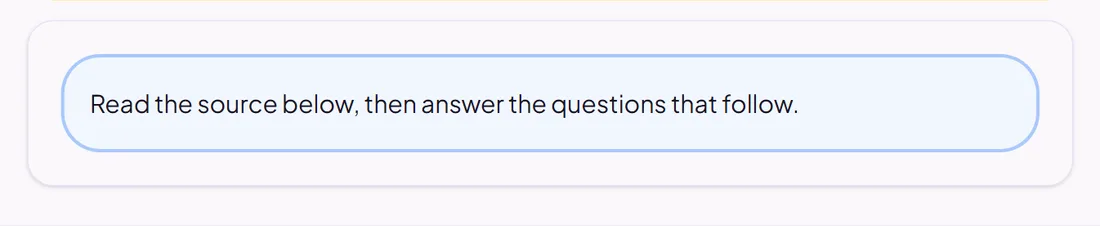
Speaking and information
Recorded answers, and something to read before the questions.
How marking works
Questions with a right answer are marked the moment pupils submit. Written answers are marked by AI against your mark scheme, and you see every mark in moderation, where you can change it. For each assessment you choose whether results wait for you to review and release them, or go to pupils as soon as marking finishes. A school can require every AI mark to wait for a teacher.
On paper
Print a paper for each pupil, with their name and a code on every page. Pupils write on the paper, you scan the class set, and the answers are read and marked like answers given online.